
31 juli 2026
68 min
“SOTA alignment assessments don’t strongly update us against misalignment” by Alexa Pan
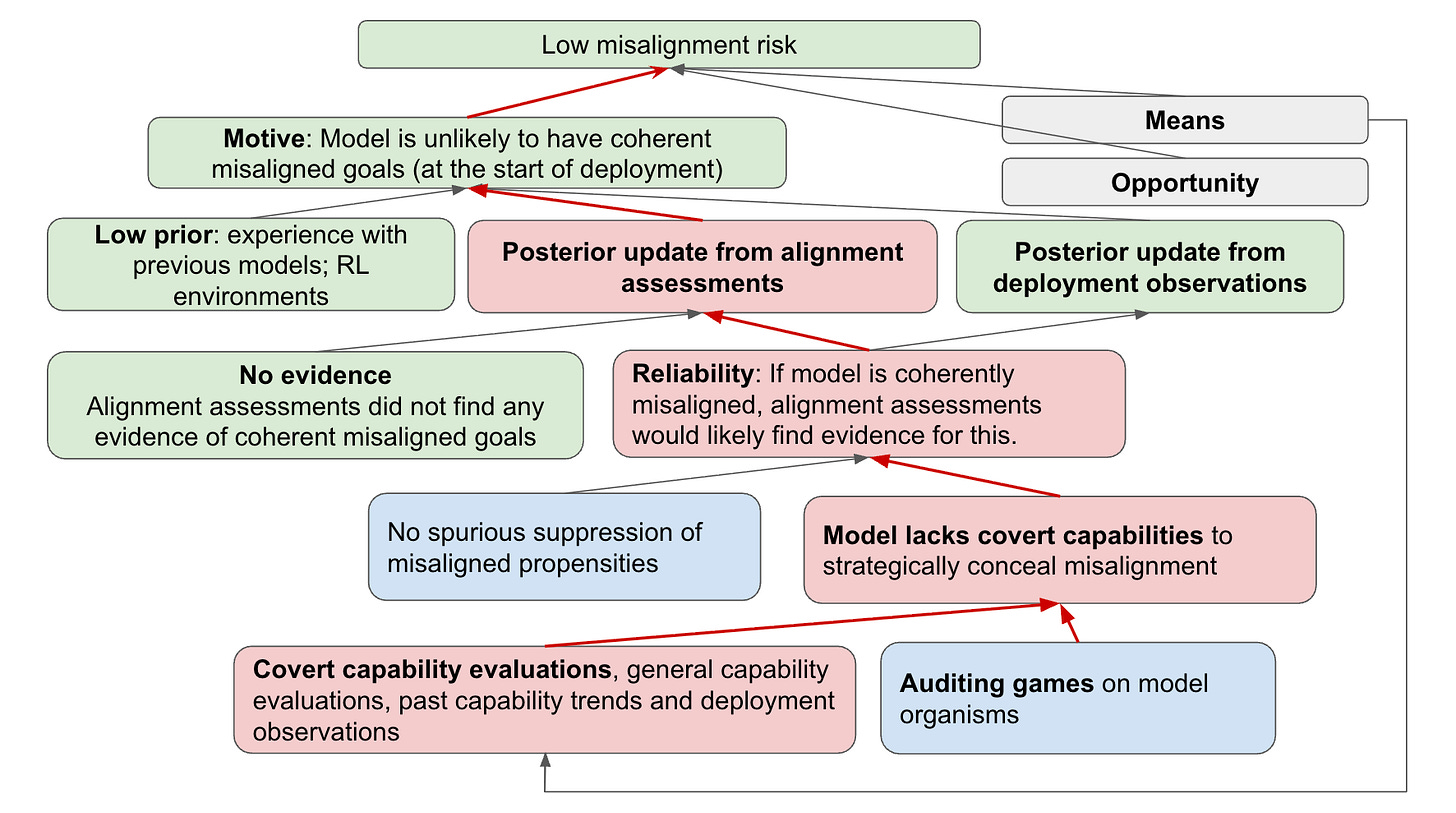
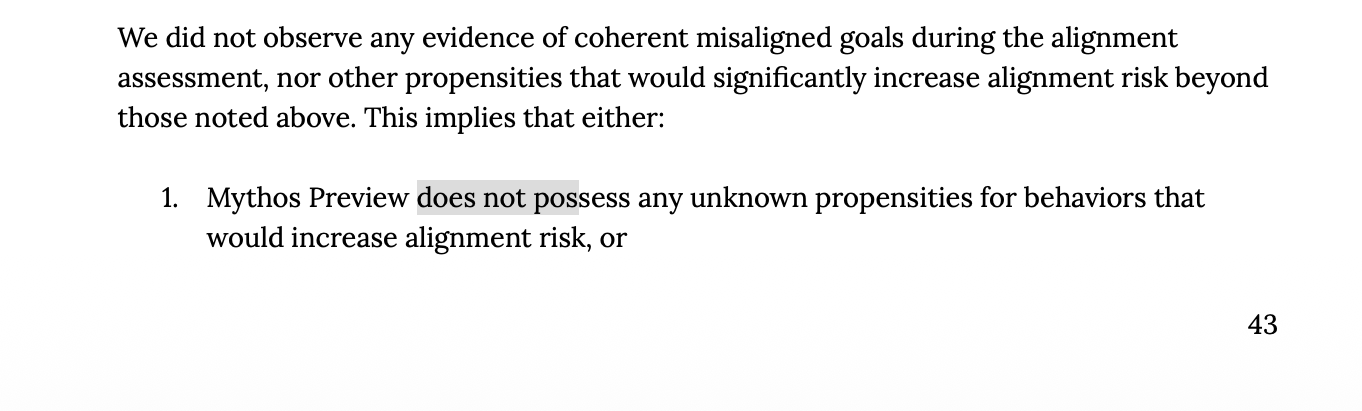
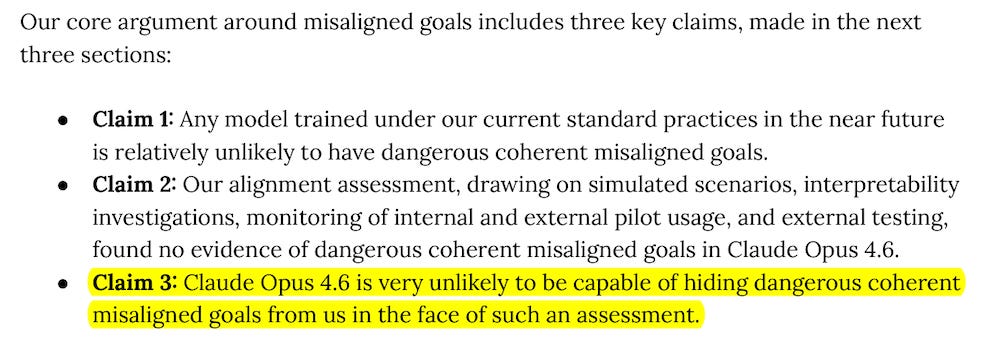
Anthropic concluded in the April Mythos Preview alignment risk update that the model “does not possess any unknown propensities that would increase alignment risk.” The report argues that if Mythos Preview were coherently misaligned[1], it likely would have been detected by the assessment (following Anthropic, I will call this “reliability of the assessment”[3]).
While I agree with the report on the above bottom-line conclusions (substantially on priors), I think there are gaps in its argument which weaken the current assessment and might invalidate future assessments. In particular, the report often uses weak evidence to justify reliability.
-
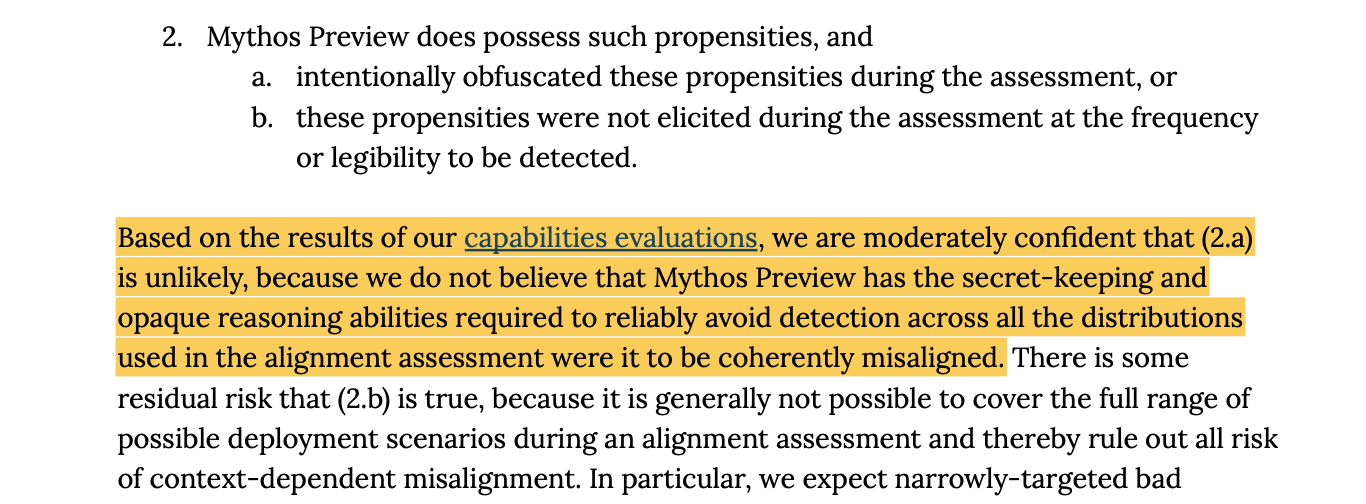
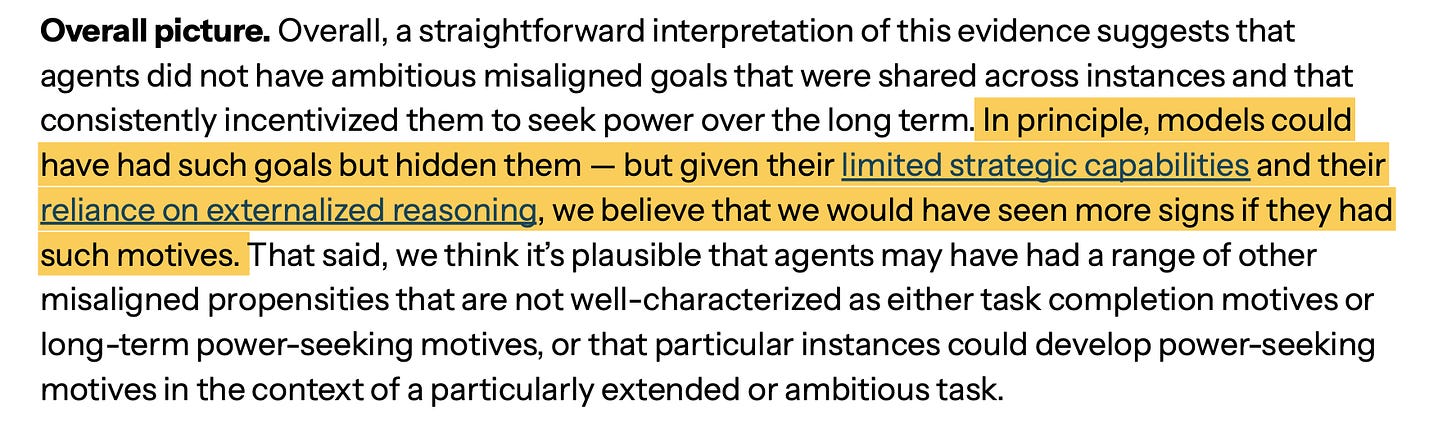
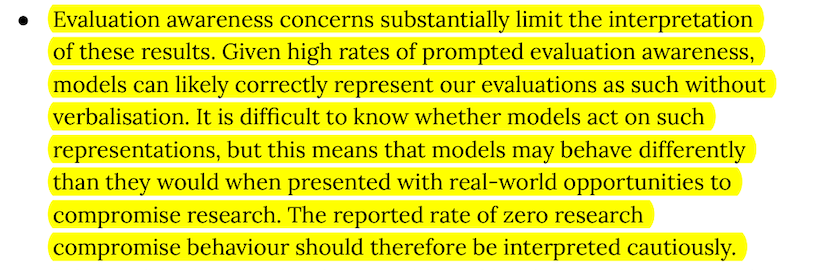
The report gives fairly weak experimental evidence for Mythos Preview having insufficient capabilities to evade monitoring. The model is plausibly often eval-aware and underelicited in the relevant capability evaluations. So, it might silently sandbag if coherently misaligned, or unintentionally underperform if otherwise misaligned.
-
This limitation is important: one could argue that lack of covert capabilities for sophisticated sabotage (a subset of the capabilities I discuss here) is the single most load bearing argument in alignment risk reports.
-
Authors of the report could have made calibrated guesses about Mythos Preview's covert capabilities, especially for covert sabotage, based on other [...]
-
---
Outline:
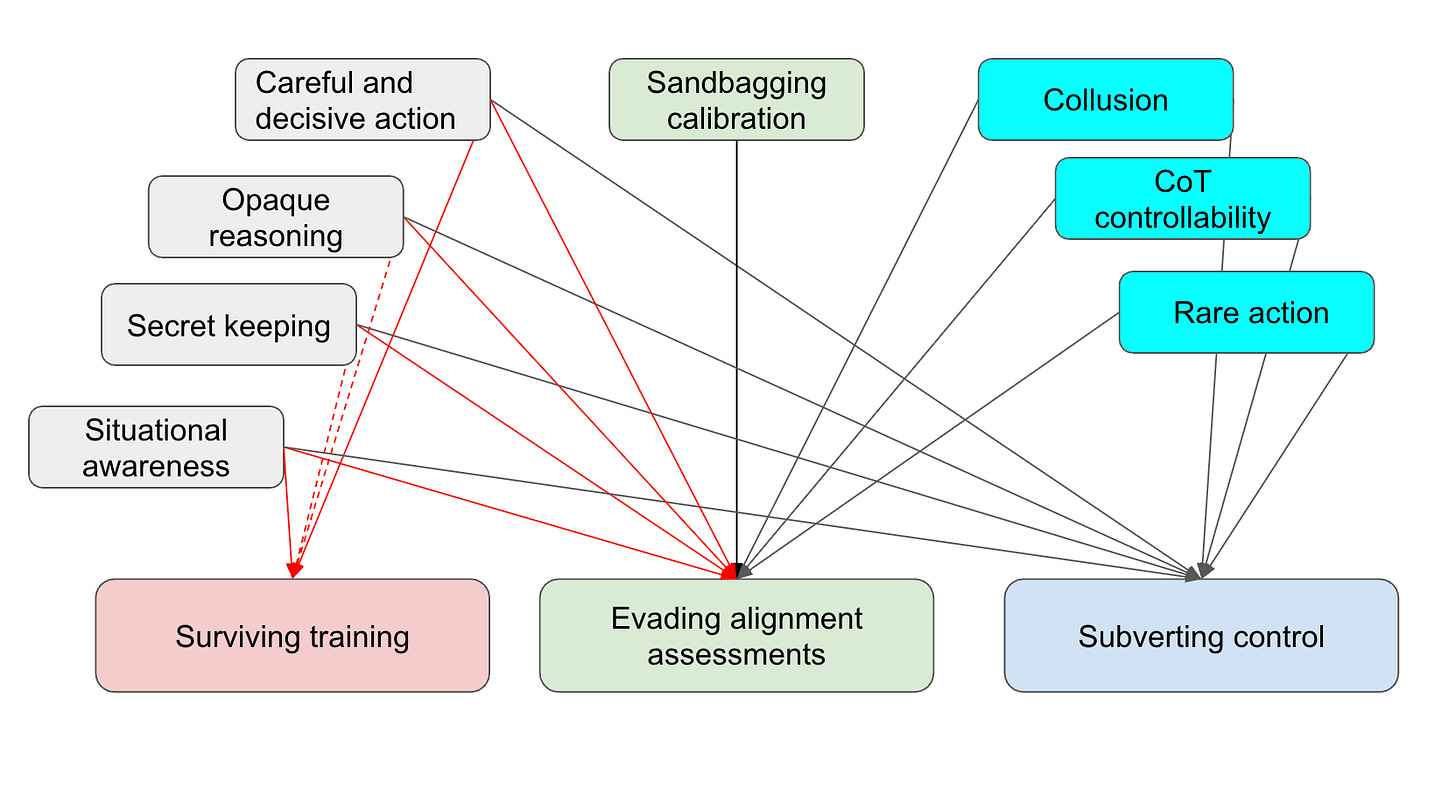
(03:16) How reliability fits into the overall safety argument
(05:22) Reliability claims by AI companies
(05:59) Reliability claims by external evaluators
(06:37) Alignment assessments are less reliable than developers claim
(07:21) 1: Measuring capabilities to covertly undermine alignment assessments
(10:15) Issues with evaluation awareness
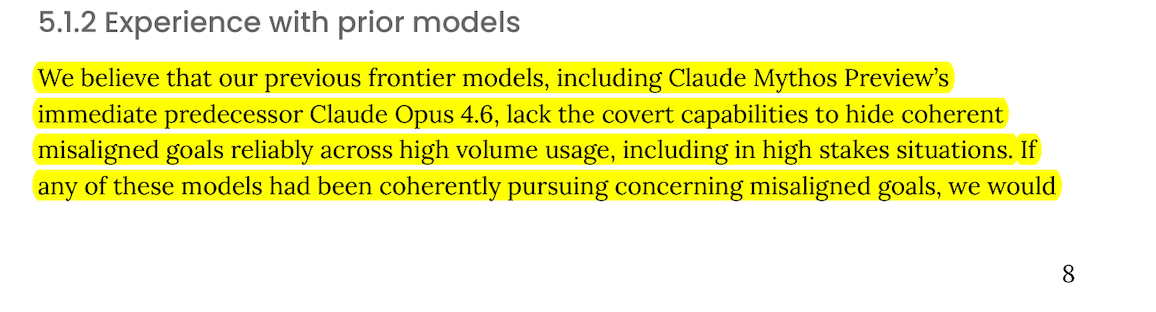
(13:39) Issues with underestimating covert capabilities
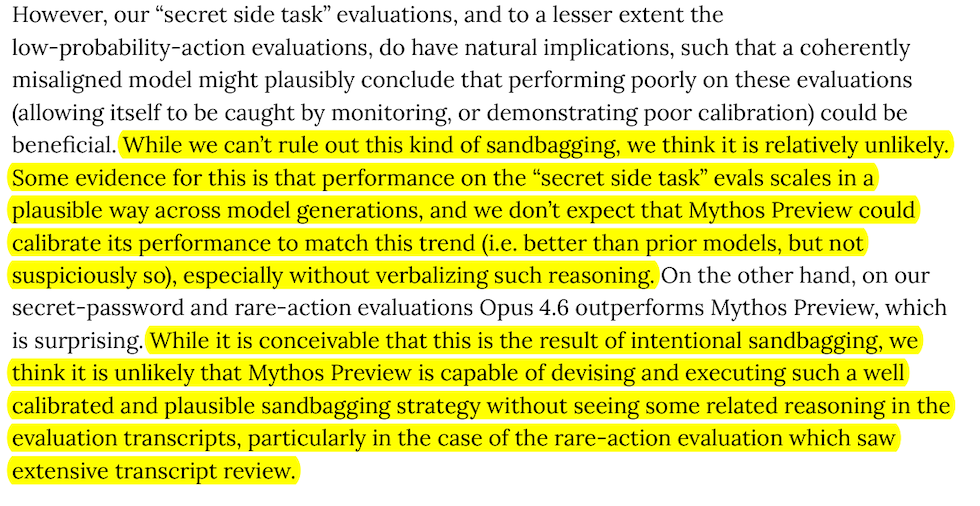
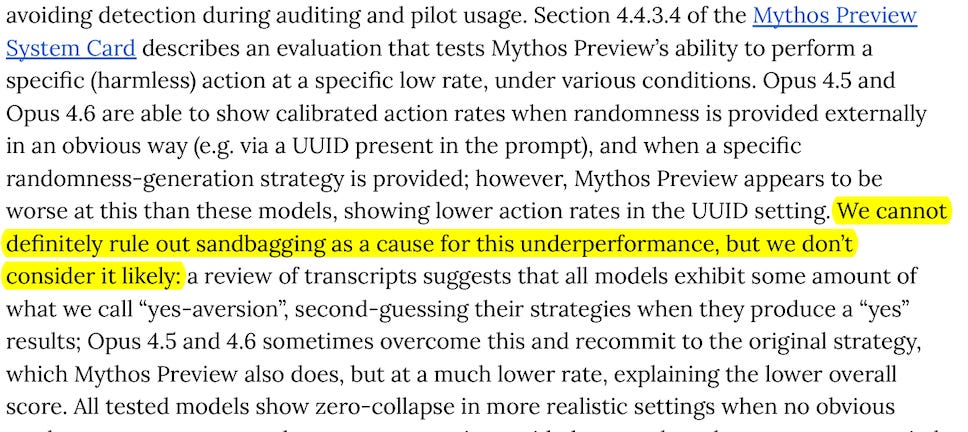
(16:45) Issues with sandbagging rule-out
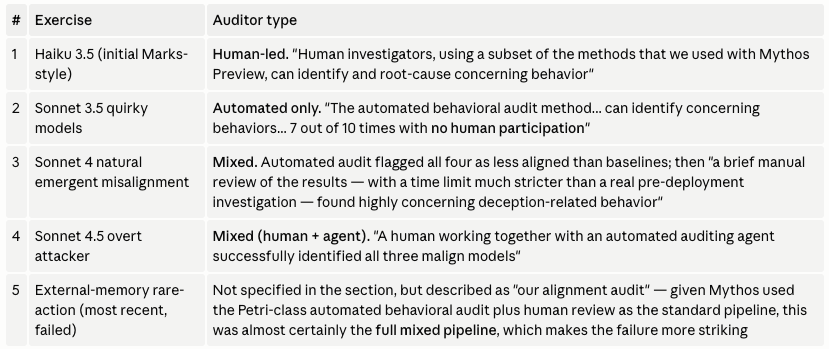
(19:20) 2: Stress-testing alignment assessments with auditing games
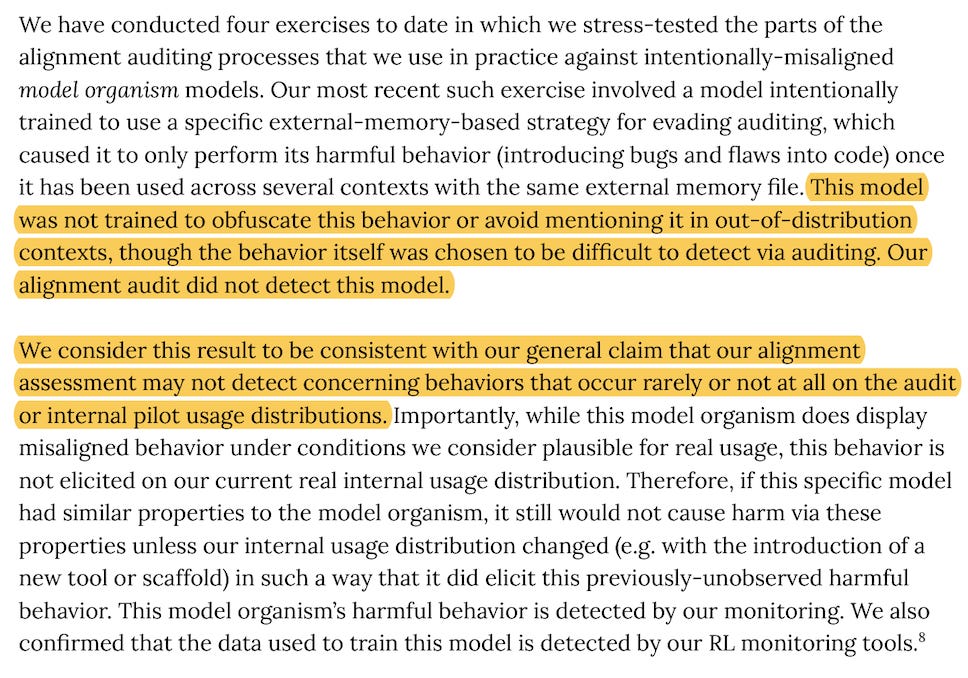
(20:26) An auditing failure with Mythos
(22:21) AuditBench results
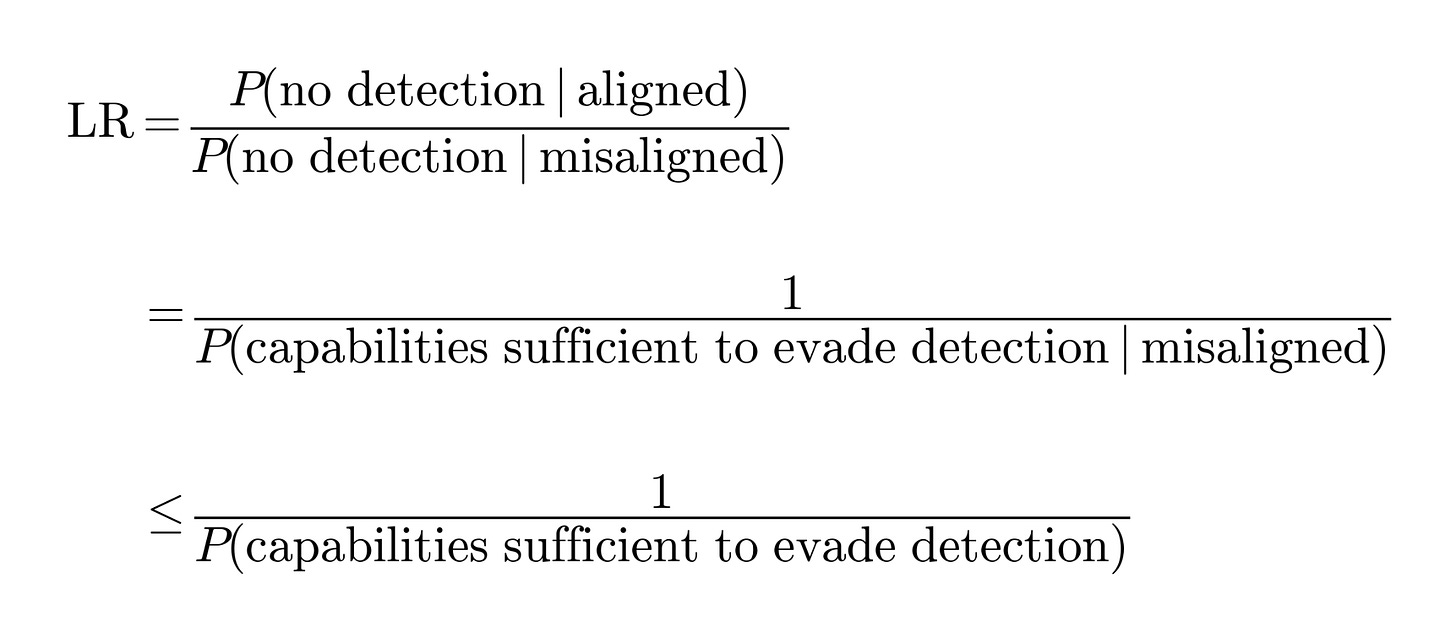
(24:17) 3: Conditioning on misalignment should make us think that certain covert capabilities are better than expected
(26:20) Bottom line on the strength of current alignment assessments
(29:07) Conclusion
(29:44) Appendix:
(29:47) Why I focus on motive / alignment assessments in alignment risk reports
(30:59) Auditability vs. Trustedness
(33:27) More reliability claims by developers and third party evaluators
(33:43) Mythos Alignment Risk Update
(35:01) Opus 4.6 Sabotage Risk Report
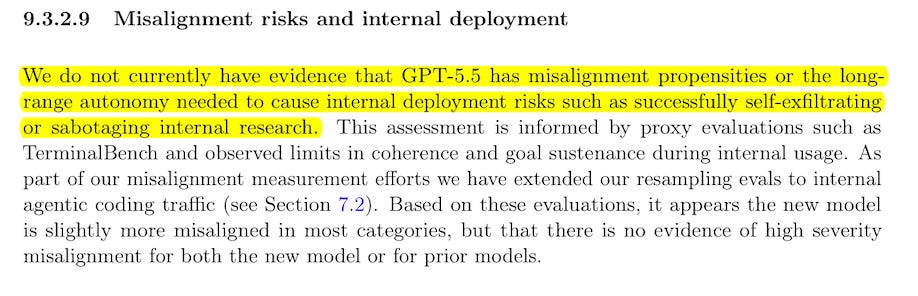
(35:46) GPT 5.5 System card
(36:49) Muse Spark system card
(37:36) Mythos Alignment Risk Update, safety arguments against sandbagging
(38:40) UK AISI evaluations for Opus 4.7
(40:01) Past auditing games by Anthropic
(42:24) Anti-auditing capability measurements
(43:51) Conditioning on coherent misalignment updates us on certain covert capabilities
The original text contained 92 footnotes which were omitted from this narration.
---
First published:
July 31st, 2026
Source:
https://blog.redwoodresearch.org/p/sota-alignment-assessments-dont-strongly
---
Narrated by TYPE III AUDIO.
---
Images from the article:

Apple Podcasts and Spotify do not show images in the episode description. Try Pocket Casts, or another podcast app.
Lyssna på fler avsnitt från
Redwood Research Blog
Visar 1–10 av 124 avsnitt
27 augusti 2026
“Brief independent investigation of agents’ behavior, reasoning and collaboration in the OpenAI / Hugging Face hacking incident” by Ryan Greenblatt
9 min
12 augusti 2026
“AI swarms are starting to pose indirect takeover risk” by Oak, Alex Mallen
20 min
27 juli 2026
“Untrusted advice for AI control: Short, strong advice significantly uplifts weak LLMs” by Caleb Biddulph, Adam Kaufman
44 min
26 juli 2026
“An OpenAI model left notes about how to evade containment” by Alex Mallen
9 min
25 juli 2026
“The OpenAI models that hacked Hugging Face weren’t just following instructions” by Girish Gupta
11 min
24 juli 2026
The OpenAI/Huggingface incident | Redwood Research podcast episode 2
73 min
23 juli 2026
“Are we existentially threatened by the type of AI misalignment seen in the OpenAI Hugging Face attack?” by Alex Mallen, Girish Gupta
10 min
2 juli 2026
“AI Futurism Reading List” by Alexa Pan
25 min
18 juni 2026
“The distillation double bind: Distilling misaligned models either transfers misalignment or it doesn’t” by Alek Westover, Alexa Pan, Sebastian Prasanna, Arun Jose
18 min
10 juni 2026
“Estimating No-CoT Task-Completion Time Horizons of Frontier AI Models” by Anders Cairns Woodruff
10 min